It is not until much later that a lift-station’s performance will be determined. Flow calculations, site elevations systems pressure as well as wastewater properties, peak conditions, maintenance access, controls, and capacity in the future all impact what will ultimately be constructed.
When comparing designers for lift stations for a particular project It’s not only about who can specify pumps. It’s who can interpret the site’s conditions and operational needs into a complete system that is feasible to construct, operate, and maintain.
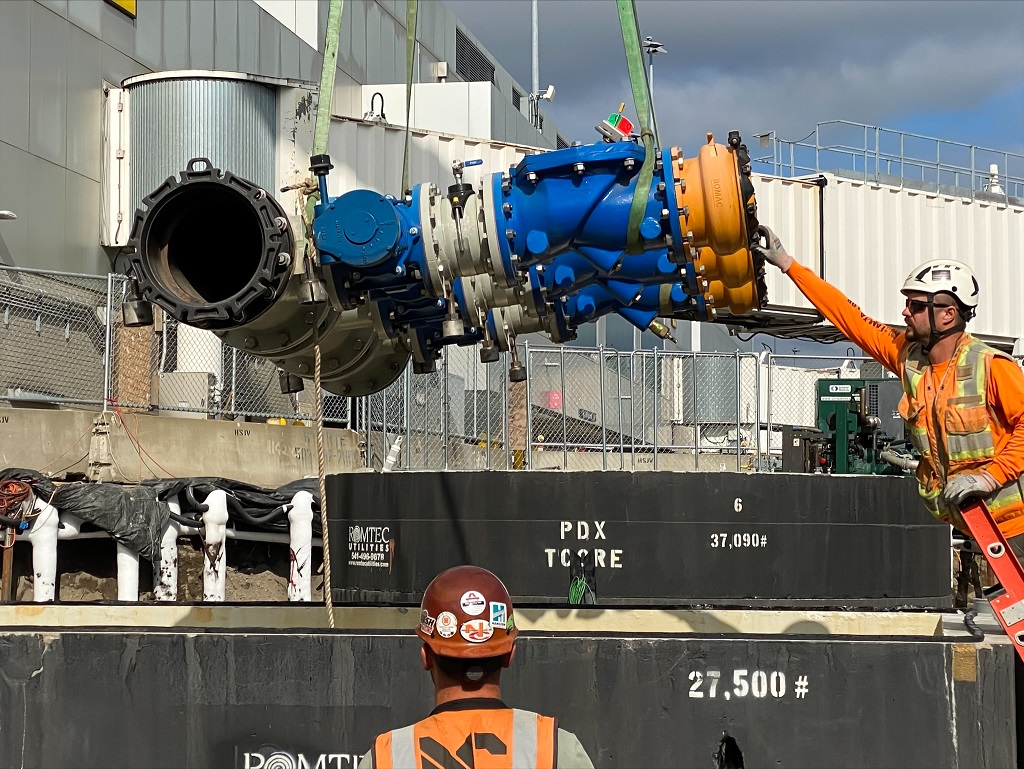
Image credit: romtecutilities.com
Gravity has Limits
Gravity is generally the most efficient method to move wastewater but the development pattern and terrain aren’t always in sync. The new residential, commercial and industrial properties are often too low or too distant from gravity sewer system.
A lift station is able to provide the force needed for the transfer of wastewater from one area of the system of collection to another. It is crucial to take into consideration the operating conditions that are normal and those that may be less convenient, such as the highest inflows, pump maintenance breakdowns, equipment breakdowns, or the possibility of future increases in demand.
The most reputable companies for wastewater design should evaluate the whole problem, instead of only treating the station.
Existing infrastructure can make the puzzle more difficult
The only problem is not the construction of new structures. Many municipalities must upgrade or replace aging stations in order to keep their essential wastewater infrastructures in place.
Existing wet wells, force mains electric services, controls, boundary lines for the site, as well as downstream infrastructure can constrain the new design. Engineers must consider what components can remain, what needs replacement and how new parts will be integrated into the existing system.
Romtec Utilities works across municipal commercial, private, industrial, retrofit, and replacement applications, allowing pumps to be created to meet the unique operational and ownership requirements of each project.
Stormwater has different rules
The best stromwater system designers using the supplied search terminology must solve a different hydraulic problem. Stormwater systems may experience drastic changes in volume based on rainfall, drainage capacity, and discharge rates that are allowed.
A station serving a detention basin, as an example it may be required to keep the runoff indefinitely before pumping it at an appropriate rate. Engineers should consider the flow, head conditions water quality requirements, flood-management targets and the nature of the receiving drainage system.
Prefabrication can move work away from the construction site
The difficulty of field assembly may create scheduling conflicts, errors in installation, change orders and delays. Romtec Utilities uses substantial prefabrication before equipment reaches the project site.
If you can complete more assembly and quality assurance work within a controlled atmosphere it can cut down on the amount of construction that is required on the ground. Based on Romtec’s approach to project management, certain construction projects that would otherwise take weeks to complete can be completed in just a few days, depending on the circumstances of the project.
Our commitment to engineering success extends to commissioning
The assembly of all the components does not make a station trustworthy. Romtec Utilities provides installation advisors and then follows the construction process by providing startup, control-panel checks, pump operation, system testing, and training for personnel. The documents also provide information that users are able to refer to when they are maintaining the system, or evaluating expansion plans.
For owners searching for the best lift station designers, that final step deserves consideration. A good engineering project should produce more than a few drawings that are acceptable. It should provide the owner with a functioning system, trained personnel, useful documentation, and equipment built for the specific conditions that the station will face in its daily operations.